Hey everyone,
There's a massive generational shift happening in America right now, and it's creating opportunities that most people aren't even paying attention to.
This week, we're digging into where the trillions of dollars in Baby Boomer wealth are actually going, why everyday investors may have a bigger opportunity than Wall Street, and how one investor went from owning zero self storage facilities to three in just two years.
We're also taking a closer look at the age-old debate of whether Baby Boomers really had it easier than Millennials, and what the economic data actually tells us.
There's a lot to unpack this week, so let's get into it!
-- -- --
[ AJO Podcast ] Why Boomer Wealth Isn't Going to Wall Street (And Where It Is)
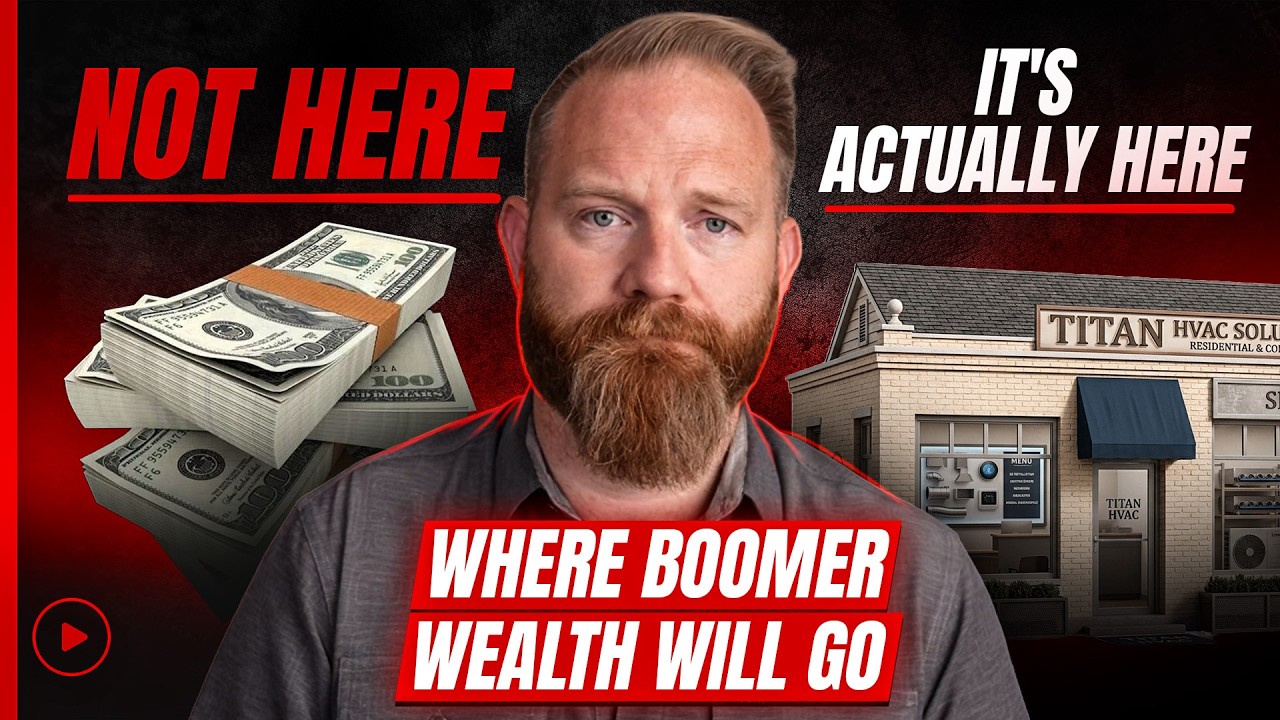
There is a $90 trillion headline floating around about the Baby Boomer wealth transfer—but almost everyone is asking the wrong question. The real issue isn't how big the total number is; it's where that money actually goes, who gets to capture it, and how much is truly up for grabs.
The lazy assumption is that Boomers will simply hand off their wealth and businesses to their kids or sell out to Wall Street. The data tells a completely different story. After accounting for debts, liabilities, spending, top-1% trusts, taxes, and charity, over $36 trillion remains that must be transferred or liquidated over the next decade.
Wall Street and large private equity firms don't want these assets because 80% of small business exits are valued under $2 million—it is simply "not worth the squeeze" for institutional capital to buy a $350k or $1.5M business. Meanwhile, 60%+ of Boomer business owners have zero succession plan, and their kids don't want to run their local HVAC, plumbing, or service companies.
In this video, I break down the exact math behind the $36 trillion transfer, why institutional buyers are locked out, and how Gen X and Millennials can use seller financing and modern digitization to build massive wealth off this 2035 expiration date.
CLICK HERE TO WATCH THE EPISODE
[ SSI Podcast ] He Went from Zero to 3 Self Storage Facilities in Just 2 Years
Many people dream of investing in self storage but never pull the trigger for a variety of reasons. Some don’t feel they have the expertise needed to manage the asset. Others assume self storage facilities fall outside their price range. Neither assumption usually holds up.
Kirk had been buying rental properties for 15 years but hadn’t worked up the courage to buy a facility for all the same reasons. That changed when his broker brought him a self storage deal he couldn’t turn down — a discounted facility with massive value-add potential, located just 40 minutes from home.
After buying that first facility and stabilizing it, Kirk realized just how scalable self storage is compared to other asset classes. Despite starting only two years ago, Kirk has already bought three facilities and wants to own $50 million in self storage in just a few years from now.
Today, Kirk is breaking down how he found, negotiated, and funded each of his three deals, as well as the exact strategies he uses to run his self storage business, improve operations, and grow his bottom line.
CLICK HERE TO WATCH THE EPISODE
[ AJO Podcast ] Did Baby Boomers Actually Have It Worse Than Millennials?
Did Baby Boomers actually have it worse than Millennials ? We look past the popular online narratives and break down the real historical housing, inflation, and economic data to compare both generations apples to apples.
In this video, I walk step-by-step through historical numbers—from 16% mortgage interest rates and workplace safety to disposable income, college debt, and unemployment—to uncover why the narrative around Baby Boomers is far more complex than social media makes it seem.
You will gain a data-driven perspective on generational struggles and learn how to prepare for the massive upcoming wealth transfer as Gen-X and Millennials shape the future economy.
Hope you enjoy the new resources.
That's it for this week - until next time!
- AJ Osborne