Hey there,
Have you heard? I'm retiring this year. Yep, throwing in the towel...traveling the world...no more work.
April fools. It would take a mountain to move me out of my career. You all know how much I love what I do!
Alright, let's get to the resources for this week. Here's what you'll learn:
✅ The wealth gap from the Roman Empire to today, explained
✅ The "tiered" pricing model that increases storage revenue like crazy
✅ Market cycles: Why they always recover (+ how to win)
-- -- --
[ AJO Podcast ] The 1% vs The 99%: How The Wealth Gap Really Works

The wealth gap today is at all-time highs—comparable to the Gilded Age when 1% owned 30% of all wealth. But here's what nobody tells you: it's worse in some ways, better in others, and completely different than you think.
I lived in Brazil's favelas in 2003. At night, I'd look up at skyscrapers with pools jutting from balconies. The wealthy took helicopters while people in the slums had nothing. That image never left me. The U.S. is heading there—but it's not the same.
In the Gilded Age, people had 80-hour work weeks, child labor at age 5, 35,000 workplace deaths/year (125 per 100K workers), no minimum wage, no safety laws, 300 sq ft shared by 8-12 people, no running water, and a life expectancy of around 40. Today, we have 40-hour weeks, child labor is illegal, 5,000 deaths/year despite 6x more workers (3.1 per 100K), minimum wage, OSHA, Social Security, Medicare, free K-12 education, and our life expectancy is 77. Workers are 40x safer and work half the time.
But there are new traps, like asset inequality: Top 10% own 87% of stocks, 45% of real estate. Bottom 50% own almost nothing. Home price-to-income was 2.2x then, but is 5.8x now. And debt traps: College costs 17% of median income in 1980. Today it's 40%+. Medical debt: $220 billion held by Americans. 66.5% of bankruptcies are medical.
There's also a visibility problem: Back then, nobody saw billionaire lifestyles. Today, 300+ flaunt it on social media daily—changing what we think we deserve. Finally, Gilded Age barriers were physical (Pinkertons with rifles). Today's barriers are invisible—credit scores, licensing (5x since 1950s), zoning laws, regulations that cost 30% of a new home's price.
CLICK HERE TO WATCH THE EPISODE
[ SSI Podcast ] Self Storage Revenue Explodes with THIS “Tiered” Pricing Model
The biggest threat to your self storage revenue isn’t your market, customers, or the asset itself. It’s you.
In the wake of the 2008 Great Financial Crisis, I developed a simple yet powerful framework for mastering operations, unlocking hidden revenue, and increasing valuation. And in today’s market cycle, it’s just as relevant as it was back then.
At its core, it all comes down to how you view your self storage facility. Too many self storage operators view their facilities as real estate “assets,” where they rent out “units” to “tenants.” But that mindset is fundamentally flawed.
Self storage is a business, with real “customers” and different types of “products.” Once you understand this, you can begin implementing a pricing model that drives true revenue growth, and in this episode, I walk through real examples that demonstrate how these changes can impact your bottom line.
The truth is, occupancy doesn’t matter. It’s about revenue. Net operating income. Real cash flow. And when you make these changes, you’ll have more of it than you know what to do with.
CLICK HERE TO WATCH THE EPISODE
[ Short ] Real Estate Market Cycles Explained (And How To Avoid Losing Everything)
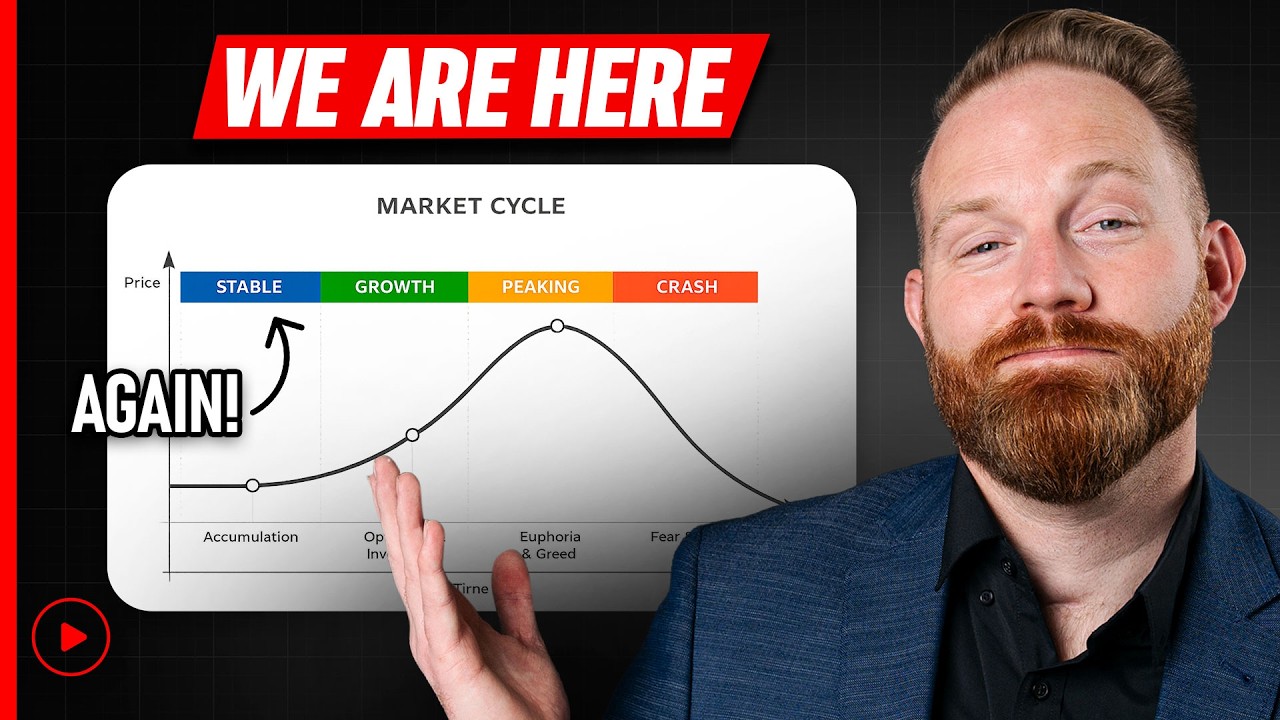
Since 1928, the S&P 500 has had 27 bear markets. Every single time, people said "it's different this time." And every single time, the market recovered. It wasn't different.
Understanding market cycles isn't about prediction—it's about knowing they're normal, expected, and temporary. This knowledge alone can be worth millions if you act correctly instead of emotionally.
Hope you enjoy the new resources.
That's it for this week - until next time!
- AJ Osborne